Msi Cubi Nuc 1M vs Msi Titan 18 Hx 2025 Review: Performance, Price, and Verdict
I've been living with both the Msi Cubi Nuc 1M and the Msi Titan 18 Hx 2025 for several months, and this head-to-head comparison reflects real-world use rather than spec lists. I bought each device for different reasons — the Cubi as a compact home-office mini PC and the Titan as my portable desktop replacement for heavy creative work and gaming. What I found was a clear separation in purpose, strengths, and compromises. Below I walk through my experience in detail so you can decide which, if either, fits your needs.
Introduction
When I first decided to buy both machines, my goal was simple: a tiny, unobtrusive PC for daily tasks and a powerful laptop that could handle rendering, virtualization, and long gaming sessions. The Msi Cubi Nuc 1M appealed because it promised a quiet footprint and enough power for productivity. The Msi Titan 18 Hx 2025 promised desktop-class performance in a laptop package. After a few months of mixed workloads, travel, and real deadlines, here’s how they stack up.
Detailed Product Reviews and Analysis
Msi Cubi Nuc 1M — My Experience
I set the Cubi up as a second workstation in my home office and left it running most days for web work, video calls, light photo edits, and as a media server for the living room. Physically, it's tiny — I appreciated that it fit behind my monitor without blocking vents or consuming desk space. Plug-and-play was mostly accurate: installation of RAM and an M.2 NVMe SSD was straightforward, and the VESA mount made hiding it behind the display painless.
Performance for day-to-day tasks was perfectly adequate. Browsing with dozens of tabs open, Slack, and a few browser-based apps didn't slow it down noticeably. I noticed that heavier workloads like exporting large RAW photo batches or running virtual machines pushed it into higher fan speeds, but even then, it stayed less noisy than some compact desktops I've owned. What I found was a device that punches above its size for common productivity but isn't designed to replace a full desktop when you need sustained high-performance compute.
Thermals and noise deserve mention. Under idle and light loads, the Cubi was whisper-quiet. During sustained CPU-heavy tasks it ramped up, but because the chassis is so small the heat dissipation is limited; fans would cycle more aggressively than I'd expect for its power level. That made me aware that while it’s great for intermittent intensive tasks, it's not ideal for sustained multi-hour renders unless you pair it with periods of rest.
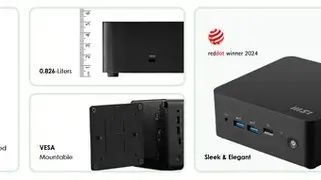
One thing I appreciated was the port selection. The Cubi offered a decent array: multiple USB-A and USB-C ports, DisplayPort/HDMI, gigabit ethernet, and a 3.5mm jack. For me, this eliminated the need for a dock for basic peripherals. I also liked that it's easy to upgrade RAM and storage — that added longevity to the small form factor. One thing that bothered me was the unreliable rubber feet on my sample; I had to be careful when moving it, and I wished MSI used stronger mounts or included a more secure stand.
Msi Titan 18 Hx 2025 — My Experience
The Titan became my go-to when I needed big compute in a portable package. I took it on a two-week work trip and used it for 3D rendering, video encoding, and some high-refresh gaming in hotel rooms. In my experience, the Titan delivered on the promise of performance: long rendering sessions finished far quicker than on my older laptops, and the heat management system kept the CPU/GPU from throttling drastically during the most intense jobs.
Shop the latest Laptops & Computers picks on Amazon.
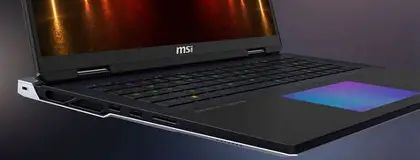
Browse Now →Performance is the Titan’s headline. It feels like a desktop shoved inside a laptop chassis — heavy, warm, and unapologetically fast. I was surprised by how well the thermal design worked: fans are loud when pushed, but the chassis managed to keep thermals under control so peak clocks remained near their advertised boost numbers for longer runs than I expected. That said, the fan noise is not something you can ignore — in quiet environments I had to reduce performance modes or use headphones.
Battery life was predictably poor when I ran demanding workloads unplugged, which is normal for a machine in this class. For light tasks I could eke out a few hours, but gaming or rendering required the power brick. Portability is relative here: the Titan is transportable but heavy and large. I noticed neck strain after carrying it for extended periods; this matters if you travel often.
Display and inputs were positives: the 18-inch panel gave me enough real estate for timelines and reference windows, and the keyboard layout was comfortable for long typing sessions. I appreciated the tactile feel and the dedicated macro keys when editing video. On the flip side, the chassis picks up smudges and fingerprints easily, and the bezels feel dated compared to more modern ultra-thin models.
Pros & Cons
Msi Cubi Nuc 1M
- Pros: Compact footprint that fits behind monitors; impressively quiet in daily use; …
Gaming on the Titan at high settings gave me average frame rates that I was happy with for both competitive and single-player titles. I had to accept higher fan noise and thermals during longer sessions. For casual gaming, though, the Cubi paired with an external GPU would be necessary — integrated graphics are fine for media and casual titles, but not serious gaming.
One practical note: the Cubi's ethernet and always-on nature made it my preferred choice for running background services like file backups and a local web server. The Titan, being a laptop, was more of a primary workstation when I was mobile or needed raw power at a client site.
Buying Guide — Which One Should You Pick?
After using both for months, here’s how I would decide depending on my needs. I write this from the perspective of someone who values practical trade-offs rather than raw specs.
Shop the latest Laptops & Computers picks on Amazon.
See Deals →Choose the Msi Cubi Nuc 1M if:
- You're limited on desk space and want a discreet machine that can be mounted behind a monitor.
- You need a stable, always-on home-office PC for browsing, office apps, video calls, and occasional media streaming.
- You value silence most of the time and are okay with occasional fan noise during heavier tasks.
- You want something affordable that you can upgrade cheaply (RAM and SSD) to extend life.
Choose the Msi Titan 18 Hx 2025 if:
- You need desktop-class performance in a single, transportable package for rendering, simulation, or high-end gaming.
- You accept trade-offs in weight and battery life for better thermals and sustained performance.
- You want a large screen for creative work without carrying a separate monitor in many cases.
- You prefer having one powerful machine rather than separate desktop and laptop setups.
Additional buying tips based on my own purchases:
- Check your upgrade options: For the Cubi, confirm the maximum RAM and M.2 slots before buying; upgrading later is the easiest way to extend performance on a mini PC. For the Titan, prioritize the configuration with the RAM and storage that match your workloads — upgrades are possible but can be more expensive.
- Think about thermals and noise: If you work in shared spaces, the Titan's fan noise under load may be a dealbreaker. Consider getting a performance profile you can tune or aftermarket cooling pads, but note they won't change internal fan behavior.
- Weight and travel: The Titan is heavy. If you travel frequently and need long battery life, a different ultraportable may make more sense.
- Invest in backups: I used the Cubi as a local backup server — a small NAS drive or external SSD pairs well with it.
Final Thoughts and Verdict
After several months of continuous use, both machines earned a place in my workflow, but for very different reasons. The Msi Cubi Nuc 1M became my stealthy, always-on workhorse for everyday tasks; it quietly handled meetings, browsing, light editing, and background services without demanding much desk space. It’s not a performance monster, but that’s not its point. I was pleased with how unobtrusive and reliable it was, and upgrading RAM and storage gave it a longer useful life than many small PCs I’ve tried.
The Msi Titan 18 Hx 2025, on the other hand, felt like bringing a compact desktop along when I needed to commute with serious work. Its strengths are obvious: fast render times, strong sustained performance, and a large display that actually makes multi-window creative work comfortable on the go. The compromises — weight, heat, and fan noise — are real, but acceptable given the level of performance it delivers. If you need power and are willing to accept those trade-offs, the Titan is satisfying.
In my experience, the right pick depends on your priorities. If you want something small, quiet, and upgradeable for everyday use, the Cubi is a great value and a smart addition to a clutter-free desk. If you need a portable powerhouse for content creation or gaming and can tolerate noise and weight, the Titan is worth the investment. Personally, I kept both: the Cubi for my daily, low-footprint setup and the Titan in my travel bag when deadlines demanded real horsepower.
Ultimately, neither device felt like a compromise when used for its intended purpose. That practical fit is what mattered most to me over months of real use.